Xbox Layoffs 2026: Why Arkane Lyon and Studios Keep Losing to Corporate Buyouts
When Corporations Buy Passion: Why Studio Buyouts Keep Failing Gaming
Xbox just cut 3,200 jobs, roughly 20 percent of its staff, and confirmed that four studios are being divested from Microsoft entirely, including Arkane Lyon, the Dishonored and Deathloop (2021, PS5, Xbox Series X/S, PC) developer currently working on Marvel's Blade. This is not an isolated event. It is the latest chapter in a pattern that started when Microsoft acquired ZeniMax Media in 2021 and has repeated ever since: a corporation buys a beloved studio, promises stability, and then cuts the studio loose the moment its output stops fitting the parent company's financial model.
Every time a beloved studio announces it has been acquired by a major corporation, the messaging follows the same script. The studio is promised more resources, the team gets stability, and the games get bigger budgets and a wider audience. It sounds like a win/win for everyone involved, and for a while, it usually looks that way too.
Then the games stop selling exactly the way the parent company wanted, the quarterly numbers come up short, and the studio that was promised a future gets cut loose instead. Xbox CEO Asha Sharma announced today's restructuring as part of a broader effort to fix operating margins that had fallen three to ten times below comparable gaming businesses. Arkane Lyon is entering the divestment process today, which means Microsoft is looking to sell or spin the studio off rather than keep building with it. Arkane's American studio, Arkane Austin, was already shuttered in 2024 following the underperformance of Redfall (2023, Xbox Series X/S, PC), so the fear inside Lyon is not unfounded.
The Zenimax Deal That Started It All
Microsoft's acquisition of ZeniMax Media closed in 2021 for roughly $7.5 billion, and it brought Bethesda Game Studios, id Software, Arkane, MachineGames, and Tango Gameworks under the Xbox umbrella in a single move. That deal is why one publisher now controls both Starfield and the Fallout series. At the time, it was framed as a stabilizing force for some of the industry's most respected studios. These developers would finally have the backing to build ambitious projects without the constant pressure of chasing whatever genre happened to be trending that year.
That promise has not aged well. Tango Gameworks, the studio behind Hi-Fi Rush (January 25, 2023, Windows, Xbox Series X/S), was closed by Microsoft in 2024 despite the game's critical acclaim and a reported Hi-Fi Rush sequel already in development. The studio only survived because Korean publisher Krafton stepped in months later to acquire it outright, an outcome that depended entirely on a third party deciding the team was worth saving. Arkane Austin was not so fortunate, and it never got a Krafton of its own.
Today's announcement shows a slightly different version of the same instability. Double Fine and Compulsion Games are being released back into full independence, keeping their IP, their back catalogs, and some runway funding from Microsoft to get started on their next projects. Ninja Theory and Undead Labs are being sold to new owners, though those deals have not closed and the buyers have not been named. Arkane Lyon is now in that same process, and whether it ends in a sale, a spinoff, or something closer to what happened to Arkane Austin is still unknown.
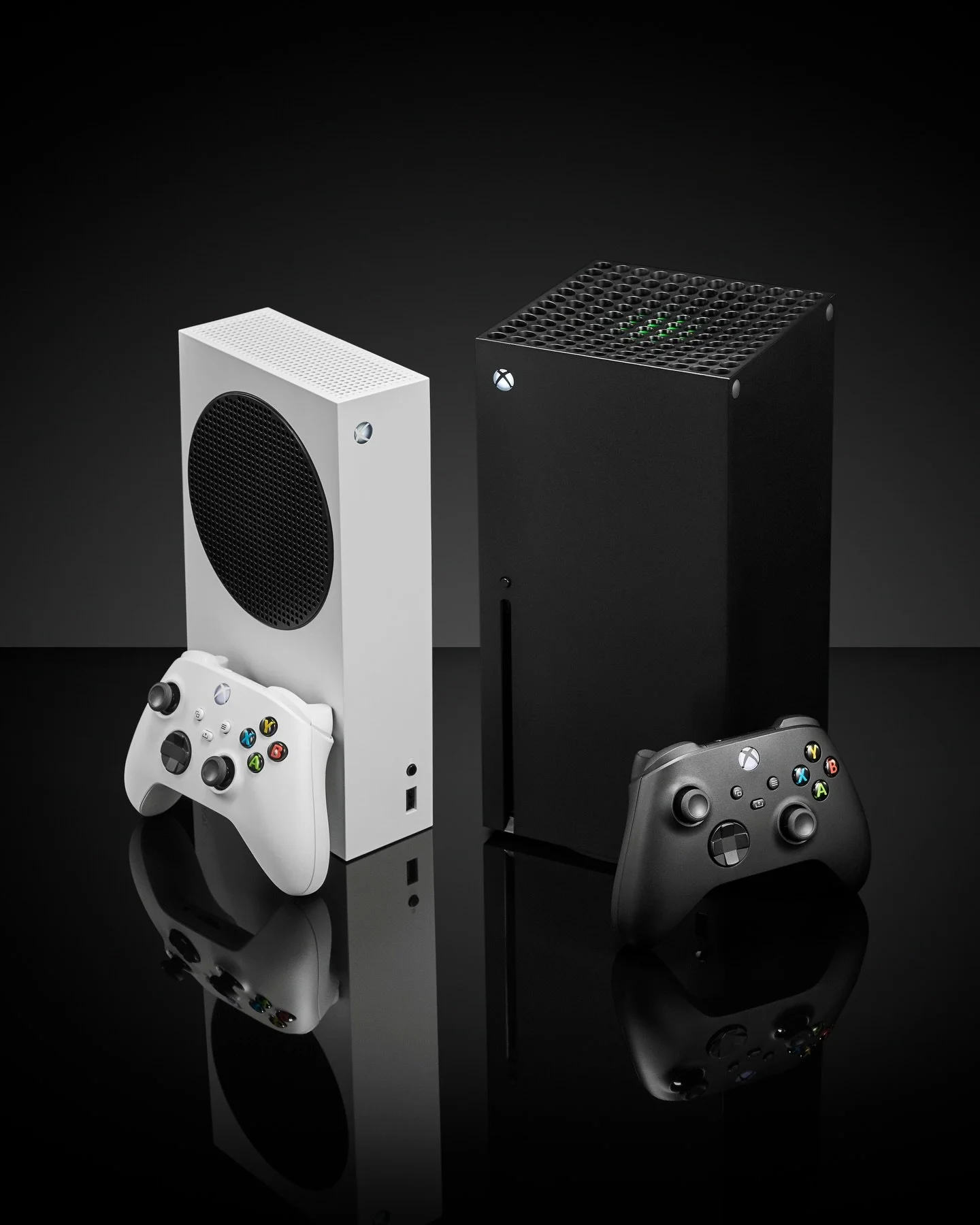
Image Credit: Microsoft
Resources Were Never the Point of the Xbox Buyout Model
The pitch behind these acquisitions always centers on resources: funding, infrastructure, distribution through Game Pass, and freedom from the publishing grind that smaller studios face on their own. What that pitch leaves out is that resources only matter to a parent company for as long as they produce the return that company is looking for.
Reporting on Xbox's current restructuring describes a clear pattern under new Xbox head Asha Sharma: studios making critically praised, narratively rich single-player games are being cut if those games do not reliably convert players into long-term Game Pass subscribers. Arkane Lyon fits that description precisely. Dishonored and Deathloop built passionate, devoted fanbases without ever becoming mass-market blockbusters, and under subscription economics, that devotion does not count for nearly as much as raw retention numbers do.
A complete, well-crafted single-player story does not generate the same ongoing engagement metrics as a live-service title built to keep players logged in for years. Studios that specialize in finishing a story and ending it are increasingly treated as a financial mismatch for the model funding them, regardless of how good that story turns out to be.
What Developers Lose
The people inside these studios are not abstractions in a quarterly earnings call. They are artists, writers, engineers, and designers who have often spent years on a single project, sometimes only to watch it canceled before release with no say in the matter. Marvel's Blade entered full production in late 2024, which means the people working on it have invested roughly two years of their professional lives into a game that may never reach players.
When a studio gets shut down, severance and timing vary, but the deeper loss is the body of work itself. A canceled project rarely gets a public release of its assets or a chance for the team to finish it independently. The creative vision simply stops, the studio's identity gets dissolved into a press release, and the developers are left to rebuild their careers somewhere else, often outside the specific niche they spent years mastering.
Recourse is almost nonexistent. These are not independent businesses that can pivot, sell to a different buyer of their choosing, or fight to stay open. Once a studio sells, the decision over its survival belongs entirely to the parent company, and that decision gets made based on internal metrics the developers themselves rarely have visibility into until the announcement lands.
What Fans Lose
Fans lose trust that investing emotional energy into a franchise is worth it. Every time a beloved series gets orphaned mid-development, it teaches players that caring about a studio's future work is a gamble, not a relationship. That erosion of trust extends beyond the specific studio that closed and bleeds into how fans approach every announcement from every developer under a major publisher's umbrella.
Sharma has also said that Bethesda will now concentrate on its established franchises, Fallout, The Elder Scrolls, Doom, Quake, and Wolfenstein. That confirms exactly what this cycle costs players in the long run. Starfield, an original and ambitious project, was notably left off that list, and the message is clear: a new idea has to prove itself instantly against decades-old franchises or it gets deprioritized. Fans who want something new from Bethesda are being told, in effect, to wait for the next Fallout or Elder Scrolls installment instead.
There is also the simple, permanent loss of stories that will never be finished. If Marvel's Blade is canceled, the version of Eric Brooks that Arkane Lyon was building, set in their interpretation of Paris and drawing on the studio's immersive design philosophy, disappears entirely. No sequel, no patch, no later revival fixes that. The closest precedent for a happy ending here is Tango Gameworks, and that outcome required a completely separate company to step in and decide the studio's work was worth preserving. That is not a model anyone should have to rely on. It is worth remembering, too, that the fan communities built around Bethesda's own franchises, like the ones we cover in our Fallout 76 guides, often outlast the corporate decisions made about the studios themselves.
Why Studios Keep Selling Anyway
It would be easy to ask why any studio agrees to this arrangement at all, but the alternative is rarely better. Independent development is expensive, distribution without a major publisher's backing is brutal, and a buyout often looks like the only realistic way to fund a project at the scale a team wants to build it. ZeniMax itself had run Bethesda's portfolio independently for years before selling to Microsoft, and that sale was framed at the time as a long-overdue payout for decades of risk the founders had carried alone.
Studios rarely walk into these deals expecting to be shut down. They walk in expecting stability, and for a while, they usually get it. The shift happens later, when a corporate parent's priorities change and the math that justified the acquisition in the first place no longer applies to that particular studio's output. By then, the studio has already given up the independence that would have let it weather the change on its own terms.

“We expanded our studio system when we needed a pipeline of content to meet multiple strategies across subscription, streaming, and devices. In the process, we have found ourselves over extended…” - June 10, 2026
Image Credit: Microsoft
Xbox Studios Returning to Independence in 2026
Sharma's own statement admitted something publishers rarely say out loud: "It is neither possible nor desirable to own every great independent studio." She added that Xbox lost 64 cents for every dollar it invested in a typical year under its old model. That is a remarkable thing to admit, and it confirms what developers have suspected for a while: the acquisition strategy itself was failing, not just the individual studios caught up in it.
Watching Double Fine's Tim Schafer and Compulsion's Guillaume Provost get their studios back, IP and catalog intact, reads like a rare win in an industry that does not hand out many. But independence after a corporate acquisition is not the same as independence that was never surrendered. These studios now have to find funding in one of the worst climates the industry has seen for it, and runway money from a former parent only stretches so far. Going independent again is not a guarantee of survival; it is just a different, less certain kind of survival than the one Microsoft was offering.
That distinction matters for how we think about these buyouts going forward. The corporations are not always the ones deciding to kill a studio outright anymore. Sometimes they simply decide the studio is no longer worth owning, hand back the keys, and leave the team to rebuild the very independence it sold years earlier, this time with less leverage and a tougher market than the one it left.
The Real Problem
None of this is unique to Microsoft, and it will not end with Arkane Lyon. The deeper issue is a games industry increasingly structured around subscription retention rather than finished, complete creative work. As long as that incentive sits at the center of how major publishers value their studios, beloved teams will keep getting bought, cut, sold, or spun out the moment their output stops fitting a growth model they were never building toward in the first place.
Passionate developers deserve better than recourse-free closures, and fans deserve better than watching the games they care about vanish mid-development or get shuffled to a new owner they have never heard of. Whether a studio ends up shut down, sold off, or handed its independence back, the common thread is the same: none of it was the studio's decision to make. Until the industry's largest publishers value finished, well-made games as much as they value subscriber retention, this cycle is going to keep repeating itself, studio by studio.