Once Human Way of Winter 2026: The Complete Survival Guide
Once Human is the most challenging scenario for the extreme weather mechanics alone. Before the major changes, it still proved to be a huge problem for players, many admitting they had rage quit because they couldn’t stop dying to cold weather. Version 2.3.6 did not change that. Actually, to many, it made the game much harder to prepare for.
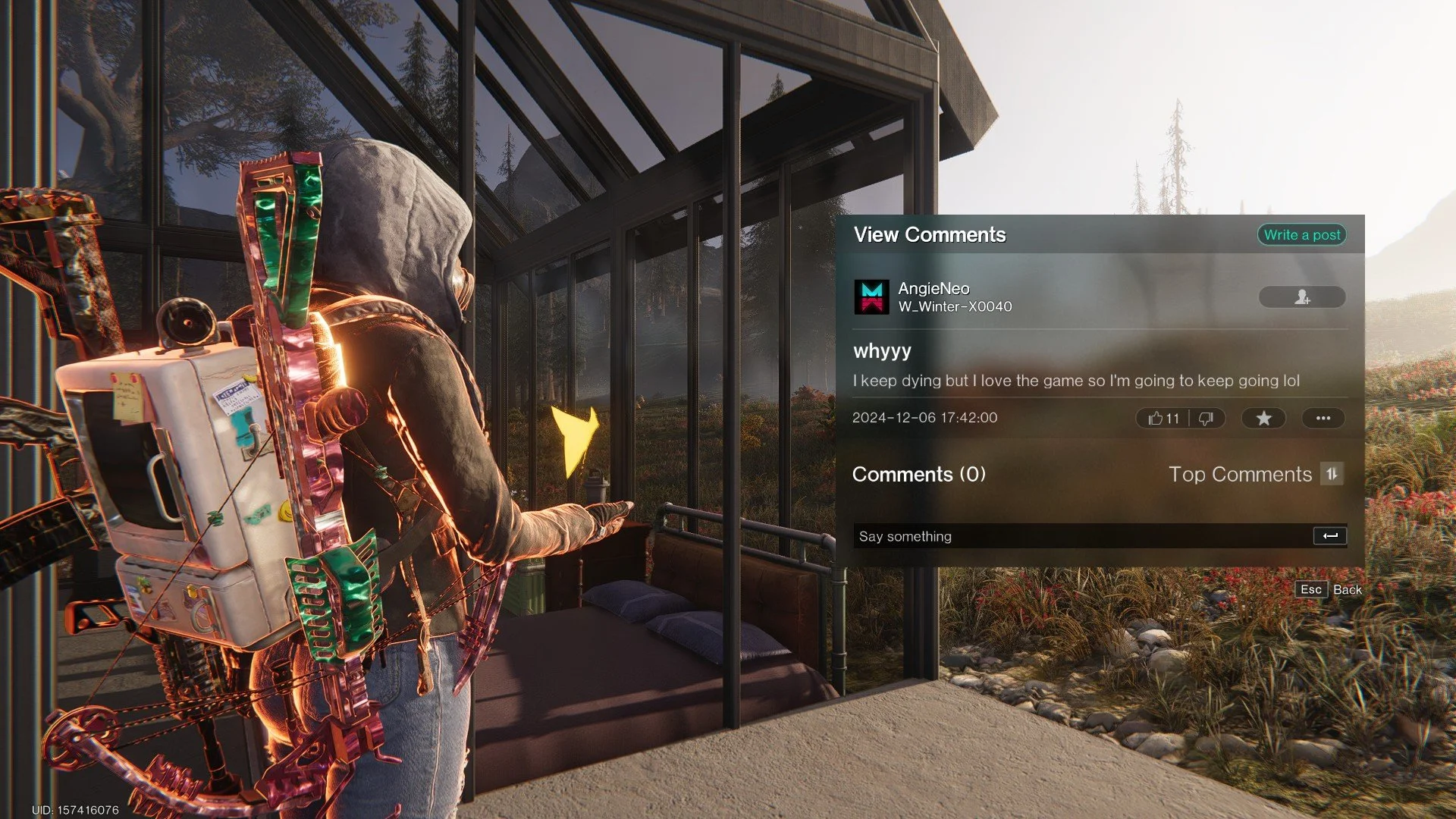
A whisper someone left talking about dying in the cold when Winter first released.
This Once Human Way of Winter temperature guide breaks down exactly what the 2.3.6 update changed, how the new systems compound the scenario's original difficulty, and what actually keeps you alive through the phase rewards and updates rolling out in 2026.
Once Human 2.3.6 Changes: What is Different in Way of Winter?
Version 2.3.6, released April 8, 2026, rebuilt Once Human's Tech system from the ground up, and The Way of Winter may have absorbed the impact harder than any other scenario because of its weather mechanics. While the Tech system is still similar to the old—level up to gain Tech Points and place those points in the Tech facility or skill you needed—it’s a little different now. While you still gain some tech points from leveling, skills, facilities, and formulas now cost more tech points than what you are allotted early on. Luckily, you can also find facilities and formulas out in the wilderness and in strongholds. You can use those facilities in your camp or your you can reverse engineer them to unlock the Tech skill, allowing you to build it with the right materials. You can reverse engineer the same items for Tech points, allowing you to build up tech points to unlock more formulas and skills.
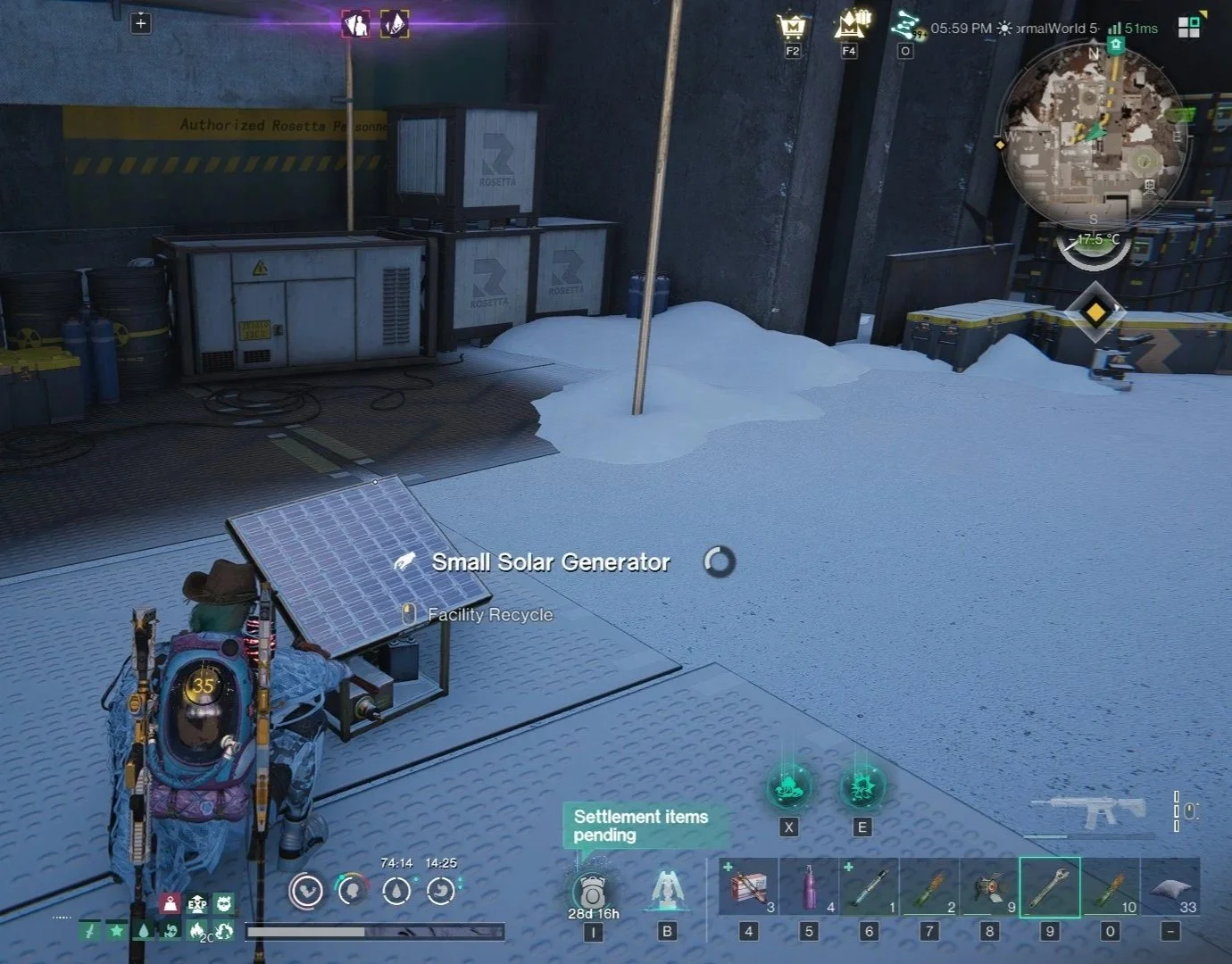
Small Solar Generator can be find in mid and high level strongholds.
Ore gathering changed too. Tin and aluminum no longer spawn in the wilderness at all, replaced by two new metal ingots processed from iron, which pushes the entire mining track straight toward higher-tier nodes. However, Digby Boy gathers Iron to make Iron Ingot, Steel Ingot, and Steel Alloy Ingot, so you should be okay until you need to craft Tungsten. Crafting materials also got consolidated: five separate fabric types merged into one, fiber. Parts have also gone from five different types to just Parts. And five plastic variants collapsed into just Plastics. Prior to Update 2.3.6 you had to find the different types of higher tier Parts and Plastics in higher level strongholds. Now, the new consolidated materials can be found in any stronghold regardless of difficulty. It frees up inventory space, but may also cost more of those materials
Gear and weapons are still categorized into tiers I-V, but Ammunition has been simplified too, with rifles, submachine guns, and light machine guns all pulling from a shared medium-caliber pool instead of separate ammo types.
How to Get Tech Points and Free Blueprints in the Way of Winter
The single biggest change in 2.3.6 is how you earn Tech Points. You earn it three ways now, and two of them require going out into the exact frozen terrain that's trying to kill you.
Reverse engineering is the fastest way to earn Tech Points. Collect cultural artifacts (basically any item) and certain facility structures using the Recycling Tool or Advanced Recycling Tool, and bring them back to your territory. You can unlock their blueprints and formulas by depositing them into the Technology Research Bench via Reverse Engineering. You can unlock a skill or crafting ability outright or receive Tech Points directly when you break down at the Tech bench. And as usual, practically everything you do gives you XP, so, you’re not prioritizing leveling over farming Cultural Artifacts.
Tech Invention works similarly in reverse: combine materials at the Tech Research Bench to attempt an invention, and a successful attempt gives you both the formula and the item, while a failed one still returns part of the materials. You can still earn Tech Points through leveling, repeated research, capturing deviations, and defeating Elite enemies.
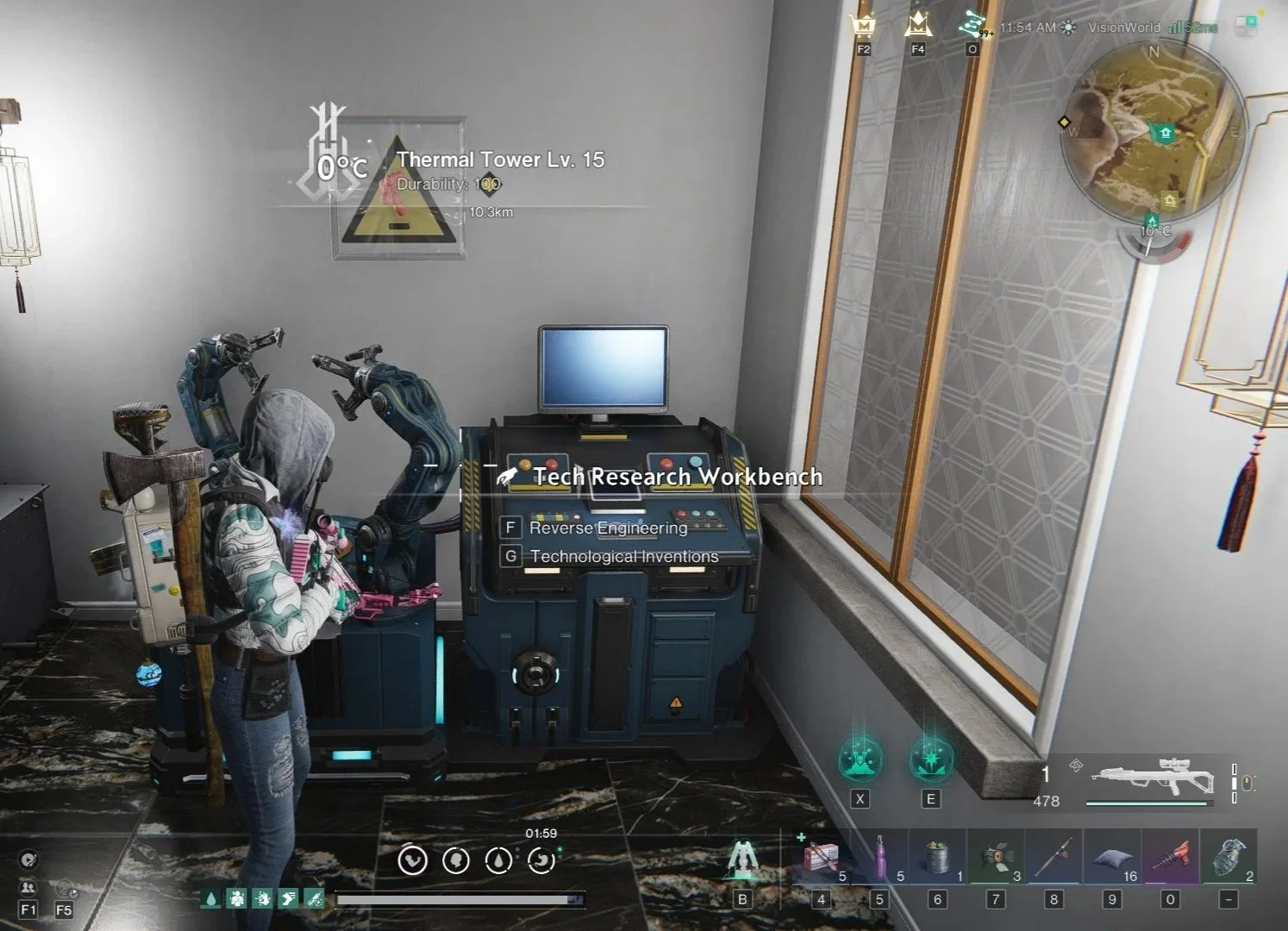
Tech Research Workbench
Once Human Temperature Guide: How to Survive Hypothermia and Heatstroke
The basics from my original Guide to Surviving the Extreme Weather is essentially the same. You will need to know how to regulate your body’s temperature. Your character’s body has three distinct temperature states: Cold – Cozy – Hot. Your body starts at the stable Cozy state. To maintain a Cozy state, you need craft the right gear, buff food, and tools. Otherwise, your body’s temperature can get progressively worse. On the far end of Cold is Frozen and the far end of Hot is Combustion and reaching either of those will result in a Blackout or instant death.
Frozen and Combustion stacks build the longer you are exposed to extreme weather. Reaching four stacks of either triggers instant death regardless of how much health you had a moment earlier. This is the mechanic behind most of the "I died out of nowhere" complaints that permeate the Once Human community.
Hypothermia has three stages. At 35 degrees Celsius, shivering sets in and permanently cuts all incoming healing by fifty percent for as long as you're in that state. Stage two slows your movement and dodge-roll speed, and stage three triggers rapid, compounding HP damage that ends in an immediate blackout if you can't reverse it fast enough.
Heatstroke has two stages: Heat and Blaze. And at 40 degrees Celsius, you begin severe sweating and your max hydration is decreased, all while rapidly draining your water levels. Entering the Blaze state at 70 degrees Celsius builds up a stacking Combustion debuff. This slows you down, shreds your gear durability by one percent every three seconds, and triggers rapid, compounding HP damage that ends in an immediate blackout at four stacks if you can't cool down fast enough.
Also, be mindful of ambient temperature drops from cold rock ore and temperature spikes from hot rock ore and lava. Approach carefully while mining, farming or fishing in lava.
Best Cold Resistance Armor and Early Game Survival Items
The game literally walks you through surviving the cold with its tutorial missions. But too many gamers are hard-headed and try to rush through it, then complain about dying. Anyway, You want to start by gathering wood and gravel. You will need to build a camp. Then, you will be able to craft a basic torch to help keep you warm. It gives an instant, permanent five-degree warming temperature.
You will need to keep plenty of wood and gravel ready so that you will have the materials to quickly deploy your campsite and use it aggressively during a blizzard to warm your body back into Cozy range. One of the very first missions will give you a Digby Boy and you may even get one when mining your first few ore. While gathering, prioritize Spikematoes, Sunny Ginger, and Polar Peppers specifically, since all three are +5 cold-resistant plants.
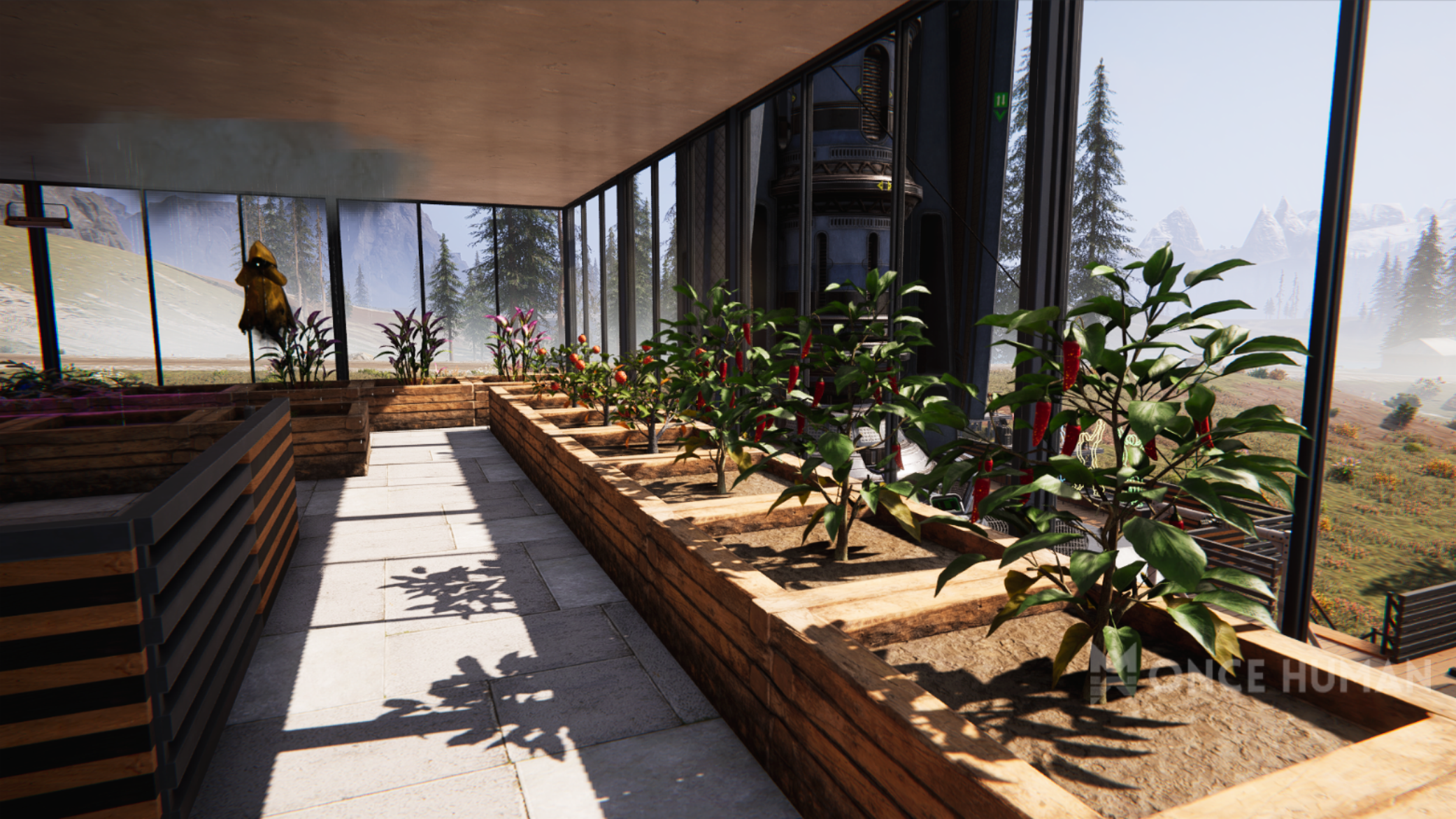
Greenhouse growing polar peppers spikematoes, and sunny ginger
Next up, cold-resistant gear. Some seasoned Winter players like to start off with at least one piece of the Blackstone set for the 2.5 cold and heat resist. But, to craft gear pieces, you will need specific hide for a desired buff. In this instance, you want to start with Cold resist. And, as adorable as they are, those reindeer must die to give your low-level character the hide you need to craft frost-resistant gear for your early survival. But if you come across bears, seals, and ram/sheep/goats, that’s even better.
The same goes for when you begin to enter Ember Strand, the hot region. You will need craft Coldium. For heat-resistance food buffs, you’ll need to gather Mint, Snow Fungus, and Ice Melon. Crocodile Hide gives you the best early heat-resistance for your chest and pants.
If you are a Beastmaster or if you can afford it, Golden Wool gives you +20 Cold and Frost Resist and +20 Heat and Burn Resist, which is the best option for both cold and heat resistance.
How to Craft Heatium and Coldium Stone
Heatium Stones are next on your must-haves list. In the Tech menu under the Exclusives tree, unlock Polar Expedition which allows you to craft Thermoium, Heatium, and Coldium. To craft Heatium, you first need to craft a Thermoium stone at any Supplies Workbench, which takes 20 gravel. Then, craft Heatium, which takes one Thermoium and 20 charcoal.
Coldium is the same, but replace charcoal with 20 ice or 10 cold rock ore.
All-Weather Stew is Your Go-to Food
For The Way of Winter, you'll notice there are six plants that directly correlate to the weather. Spikemato, Sunny Ginger, Polar Pepper are all plants that give a base of +5 cold resist. Mint, Ice Melon and Snow Fungus all give a base of +5 heat resist. 1 Spikemato, Sunny Ginger, Mint, and Ice Melon each make the best all-weather food: All Weather Stew, which boosts heat and cold resist by 30 and boosts Stamina 30%. You can unlock All Weather Stew in the Tech Skill tree, Exclusive, for 250 Tech Points, or you can find it in high-level areas. It should be one of the first skills you unlock.
Is Chef the Best Class for WoW?
The best class for The Way of Winter is Chef. At least, for me, Chef is the best class. Being a chef comes with one of the best perks for survivability in WoW: you can have two food buffs and two drink buffs at a time. Being a chef also allows you to create meals that can boost your damage and add an extra layer of weather protection, as it allows you to use up to four ingredients to craft a new meal. For example, in addition to the All-Weather Stew you can combine Spikemato, Sunny Ginger, Polar Pepper and Steel Ingot to create Canned Vegetables that gives you +15 cold and frost resist or Mint, Ice Melon, Snow Fungus and Steel Ingot for +15 heat and burn resistance. Using Deviated plants improves the stats of the food.
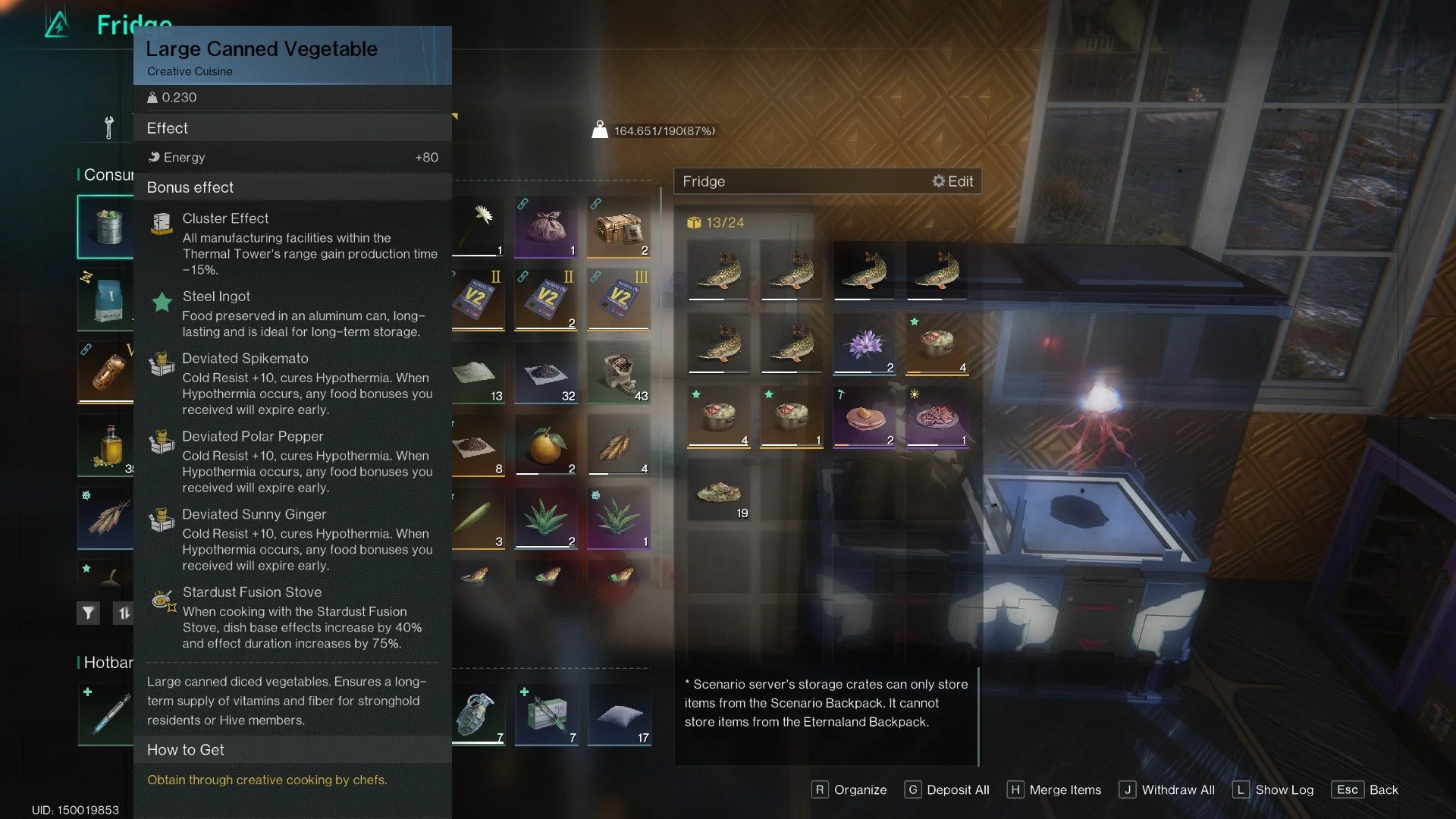
Crafted Large Canned Vegetable with +30 Cold Resist
Once Human Thermal Tower 2.3.6 Material Costs and Placement Rules
Thermal Towers are still very useful against the extreme weather, but 2.3.6 changed how to use them and what it costs to build one. Thermal towers used to be built by Hive members in the Hive’s designated area of territories giving Hive members’ buffs and allowing them to adjust the temperature to protect against the extreme weather. The function is still the same, but now, Thermal Towers are built by individual players and placed in their own territory. With that adjustment, the materials to build and upgrade it have changed and are much more manageable for a single player. The materials to build a Thermal Tower after 2.3.6 are 40 Alloy Steel Ingot, 60 Steel Ingot, 30 Metal Scraps, 20 Electronic Parts, 10 Storage Batteries.
How to Use Chaosium Hubs to Stop Extreme Weather Events
Chaosium Hubs are scattered across Arkam and generate blizzards in the cold regions of Onyx Tundra and Vena Fjord and volcanic storms in Ember Strand, scaled from level one up to level four, with level four being nearly unsurvivable. They manage the temperature of a given area. To bring the blizzard or volcanic storms down, you need to deposit 150 Chaosium Hearts into the Chaosium up. The fastest way to gather Hearts is farming hot rocks and cold rocks. If Chaosweaver were an easily spawnable boss I’d suggest farming it cause it drops roughly 50 hearts per kill. However, low level characters, low amount of players on a server’s—not all that feasible until you are max level and actually have a group of people to farm with you. So, to farm Chaosweavers, you need to make sure you have a group or have exceptionally optimized end-game gear and weapons. Both would be ideal.
Way of Winter was never meant to be an easy scenario (it literally says Hard), and 2.3.6 didn't change that reputation so much as it altered the way we prepare for it. Players still need to manage cold and heat the same way they did at launch, but now you need to manage the Tech system that costs a bit more points than early leveling provides for some of your most needed skills. The Chaosium Hub also needs some server coordination to keep under control. Luckily, the Once Human community stays on top of it, everyone usually contributing a few hearts to each hub that is in an area that’s heavily farmed.
The Way of Winter scenario is incredibly challenging, especially when you combine the Vision Wheel with the weather mechanics. But that’s really what makes it fun. Do you have any questions or have anything to add? Let me know in the comments.