Why I Prefer Chinese Romance Dramas to Western Romance Films
Everyone who knows me (or reads my content) knows I love Chinese video games and dramas and had been shying away from Western game narratives and even Hollywood for a while. Well, to be quite honest, I was never really into romance films from Hollywood. I grew up in the 80s, so, as a child, romance wasn’t really on my radar. I remember my very first time watching The Princess Bride and loving the fantasy, the story, and of course, Westley. But then, growing and watching teen romance films disgusted me even early on. Why? Because they almost always hypersexualized teens.
And then the grown-up romance films sigh that’s where they really lost me. The message I received from Hollywood was that love is a struggle. There’s supposed to be pain and struggle. Love wasn’t about synergy but about women compromising themselves to have a husband because society says we’re supposed to have one. And that was 80 percent of what discouraged me from wanting to date or get married as I continued to grow.
To me, Hollywood’s interpretation of romance, for women, is a humiliation kink. Women constantly have to prove themselves in some way to be worthy. Nothing was more evident than, probably the worst romance film with the most fire soundtrack, “Love and Basketball.” While my friends were fawning over how romantic it was that Monica (played by the amazing Sanaa Lathan) played Quincy (played by Omar Epps) in a 1v1 basketball match for his heart, I was utterly disgusted. First, that man was playing like there was a multi-billion-dollar contract to beat her! Second, his fiancé was upstairs in bed sleep. TF?!
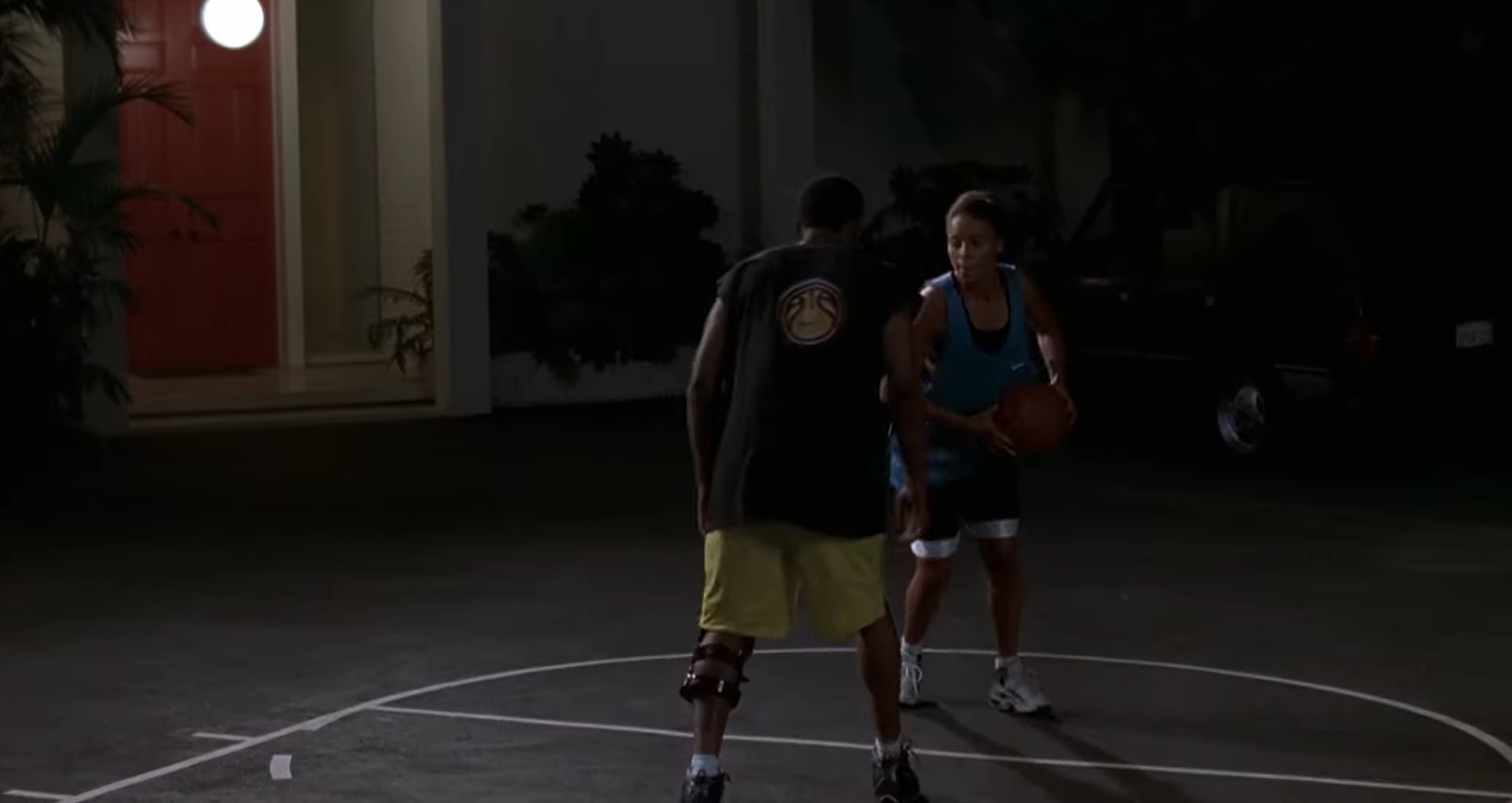
Screenshot from Love & Basketball where Monica challenged Quincy to a 1v1 to play for his heart
And, as much as I loved “10 Things I Hate About You,” watching it as an adult gave me the ick. Because, like most high school romcoms, it centered on making a bet to “get the girl,” to humble her, or tame her. Hollywood romance plots are often a catalyst for the female lead's makeover or humility, whereas in most romantic Chinese dramas, the male lead's transformation (learning to care, becoming emotionally available) is just as, if not more, central to the plot.
What is Romance?
Romance can mean different things to different people. But at its core, romance is a feeling, narrative, and cultural expression that idealizes a passionate, intimate connection between persons or of a place, moment, or idea. For some people romantic love is expressed through flowers, fine dining, and everything Valentine’s Day sells. For others, romantic love is expressed through little, everyday moments and actions like how someone cares for you daily.
What Romance Looks Like in Hollywood vs China
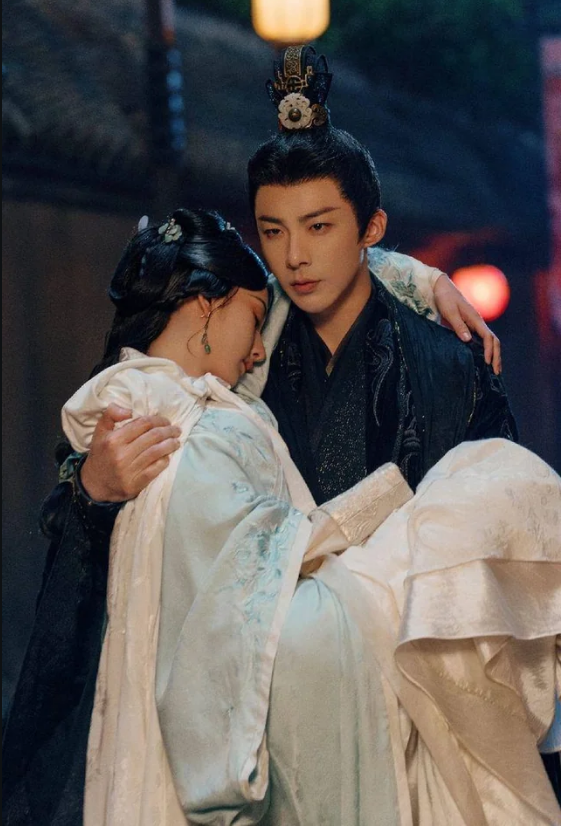
Credit: WeTV / The Prisoner of Beauty
Culturally, Hollywood and the East, specifically, China, have different ideologies about romance and it plays out in media. In the West, romance films center on individualism—being independent. The primary goal is to fulfill your own desires and potential, with the end goal culminating in some sort of grand gesture in public. In China, however, romance films are about harmony, not just with their partner, but within their network. Guānxīn (to be cared for) is a continuous theme. The goal is balance, duty, and building a deep bond that strengthens one’s place in the family and community.
In the historical Chinese drama “The Prisoner of Beauty,” the main couple start out as enemies who are betrothed to bring about peace between their families and nations. As Manman (played by Song Zu’er) and Wei Shao (played by Liu Yuning) navigate being married to their enemy, they still showed care and respect toward each other. Though you could feel their chemistry together, it was about more than physical chemistry. For all of Wei Shao’s tough talk about being on guard against Manman, he still made sure everyone his household respected her as the Lady of Wei, getting to know her character.
Hollywood romance favors a fast-paced narrative driven by physical chemistry and decisive declarations, where the climax is often the passionate confession that secures the couple. China, on the other hand, prefers to depict a slow-burning courtship that emphasizes emotional resonance and enduring commitment. Because broadcast regulations and social conservatism limit overt sexual content, the bonds formed in Chinese romance feel more enduring.
Where Hollywood normalizes explicit physicality as a primary expression of passion, Chinese narratives strategically withhold it to amplify emotional resonance. The celebrated milestones become a guarded first touch, a forehead kiss, or a routine act of service like bringing food, ensuring rest, sharing an umbrella. They become the true love language.
How Chinese Romance Dramas Raised My Standards
I should mention that my preference for Chinese romance dramas are not about just entertainment tastes. For me, it’s about having a different understanding of connection.
While working on this article, I realized I could not easily recall a Western film where a husband or boyfriend simply cared for his sick partner in a normal, everyday way. Out of curiosity, I searched for examples. Fewer than 20 came up, and almost all involved terminal illness. There were almost none about mundane, deeply human care. I found no instances of “she has a cold, so I made soup, made sure she drank fluids, took her meds, and rested.” And that was incredibly disappointing.
And then I thought about it: when I was married and became ill, my husband went to the store to buy canned soup, but I still had to prepare it myself and make my own tea while running a fever. Years later, when I was in China and caught a cold, a male friend who lived in an entirely different city ordered soup and tea to be delivered to my door. He checked on me regularly, reminding me to rest and take care of myself because I was alone. He made sure I got to my destinations safely. I’ve also been on the phone with my married friend and language exchange partner, who lives in Shanghai, as he made congee for his wife who was having period cramps.
This, to me, is the fundamental difference between how romance is portrayed in Hollywood versus China. One often romanticizes endurance and emotional labor. The other romanticizes care.
And I think that's the fundamental difference between how romance is viewed and portrayed in the Hollywood vs in China. That has helped me put into perspective, not just what I want, but what I need from a relationship. It’s not the bossy CEO fantasy of Chinese dramas that I want. It’s the attentiveness or tǐtiē, the deliberate, routine, deeply human care that may seem mundane to many. The long walks of just talking or even the comfortable silence of a shared moment. It’s Guānxīn that I, not only want to see in films, but it’s what I want for myself, and I refuse to settle for anything less.